
AlphaGenome: A Unified Foundation Model for the Regulatory Genome
How the latest breakthrough from Google DeepMind is merging long-range context with base-pair precision to redefine bioinformatics
You know that at Nexco we have closely monitor the rise of new tools, software, methods, AI systems, and the super-interesting so-called “foundational models” meant to “understand” the underlying language of biology to then run concrete predictions about it. From the protein-structure predictions of AlphaFold 3 to the cross-dogma capabilities of Evo, the transition from specialized tools to generalist models is accelerating. And here we bring you the latest advance.
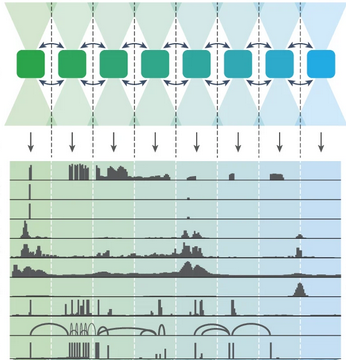
This week, a new milestone was reached with the publication by DeepMind of a paper describing AlphaGenome in Nature. While previous models often forced a trade-off between looking at long genomic distances or maintaining high resolution, AlphaGenome does both. It processes 1 megabase windows of DNA sequence — long enough to capture distal enhancers — while retaining single-base-pair resolution and thus being capable of thousands of detailed functional genomic measurements and predictions.
The Power of Multimodality
The true potential of AlphaGenome lies in its ability to predict 11 different biological modalities simultaneously. Rather than using one tool for splicing and another for chromatin accessibility, AlphaGenome provides a unified view of:
- Gene Expression: RNA-seq, CAGE, and PRO-cap.
- Splicing Dynamics: Predicting splicing sites as well as splice junction usage and competition.
- Chromatin Architecture: DNase-seq, ATAC-seq, and histone modifications (essentially observables from ChIP-seq experiments).
- 3D Genome Structure: Predicting chromatin contact maps (what you get with Hi-C/Micro-C experiments) at a 2kb resolution.
By training on both human and mouse genomes, the model has developed a robust “grasp” of the regulatory code, outperforming previous state-of-the-art models like Borzoi, Enformer, and SpliceAI in 25 out of 26 benchmark evaluations.
Beyond Prediction: Deciphering Disease Mechanisms
One of the most exciting aspects of AlphaGenome is its utility in variant effect prediction. Because the model is multimodal, it can virtually “screen” a genetic mutation to see how it ripples through different layers of biology.
In the study, for example, AlphaGenome was used to interpret oncogenic mutations near the TAL1 oncogene. The model identified the specific creation of a MYB transcription factor binding motif, a subsequent increase in H3K27ac (an activation mark), and the resulting change in 3D chromatin looping. This level of “in silico experimentation” allows bioinformaticians to prioritize variants of uncertain significance with unprecedented mechanistic clarity.
Bridging the Gap in Splicing and eQTLs
For clinical research and rare disease diagnostics, AlphaGenome offers two major upgrades:
- A Holistic Splicing Scorer: By modeling splice junctions directly, AlphaGenome captures complex “exon skipping” and “intron retention” events that site-specific models often miss.
- Superior eQTL Sign Prediction: AlphaGenome achieved a 25% improvement over Borzoi in predicting whether a mutation will increase or decrease gene expression. This is a vital leap for interpreting GWAS (Genome-Wide Association Study) results, where the direction of effect is often the missing piece of the puzzle.
Nexco’s View: The Shift Toward Unified Pipelines
AlphaGenome is not only accurate but also highly efficient, running complex predictions in less than a second on modern GPUs. This efficiency makes it a perfect candidate for integration into large-scale discovery, prediction, and data interpretation pipelines.
The arrival of AlphaGenome confirms a trend we have championed: the future of bioinformatics is integrated. And with in silico tools like AlphaGenome, our vision of “digital twins” for cell biology and medicine — as we like to call it at Nexco — slowly starts to materialize. Our prediction is that future models will broaden their multimodality to include molecular structures, and when this time comes we will see new major breakthroughs in AI for biology.
At Nexco, we are already exploring how to leverage the AlphaGenome architecture and its multi-modal outputs to benefit our clients in drug discovery and clinical genomics. Whether it is identifying tissue-specific enhancers or predicting the impact of deep intronic variants, these foundational models are transforming biology from an observational science into a predictive one.
Google DeepMind has officially made AlphaGenome accessible via a hosted API and an open-source research repository, providing a powerful new resource for the scientific community. While the model and its outputs are strictly designated for non-commercial research, we are pleased to offer technical consultancy to help academic labs integrate this technology into their specific research, non-commercial workflows. Our team can assist in setting up robust, non-commercial pipelines ensuring your research group can harness this state-of-the-art model efficiently.
By bridging the technical gap, we aim to empower scholars to explore the complexities of the non-coding genome while ensuring that all implementations maintain full compliance with DeepMind’s non-commercial licensing and terms of service. We stay at the cutting edge so that your research can, too!
References and related material
- Original article: Advancing regulatory variant effect prediction with AlphaGenome (Nature, 2026): https://www.nature.com/articles/s41586–025–10014–0
- Explore the model: AlphaGenome API, tools and documentation: https://www.alphagenomedocs.com/api/index.html
- Related posts by Nexco: Read our previous coverage on Evo (https://nexco.ch/blog/AI-models-begin-to-capture-the-whole-central-dogma-of-molecular-biology), AlphaMissense (https://nexco.ch/blog/AlphaMissense-Transforming-Genetic-Variant-Prediction-for-Cutting-Edge-Biology-and-for-Precision%C3%A2%C2%80%C2%A6) and biological foundation models (https://nexco.ch/blog/Foundation-Models-for-Biology-to-Support-Bioinformatics)
Related Posts

Nos locaux étaient situés:
Nexco Analytics Bâtiment Alanine Route de la Corniche 5B 1066 Epalinges, SwitzerlandNexco Analytics a fermé
Nexco Analytics a cessé ses activités et ne peut plus recevoir ni répondre aux messages. Merci de votre compréhension.
Ce formulaire de contact a été désactivé.
© 2024 Nexco Analytics. All Rights Reserved.